

🌱 Moving My Hydrangeas to the Balcony: Fungus Gnat Battle & LED Growth Update
Hydrangeas may not be spring's first bloomers, but when summer arrives—they truly shine.
Here's how my indoor experiment with Diamant Rouge and Limelight hydrangeas turned into an unexpected war with fungus gnats… and why I had to move them outdoors.
Quick Summary:
- I bought young Diamant Rouge and Limelight hydrangea saplings in early May.
- I first grew them indoors under full-spectrum LED grow lights.
- The foliage stayed green and new shoots emerged from the base.
- Fungus gnats appeared and multiplied in the moist, fertilized soil.
- Hydrogen peroxide spray and vinegar mixtures did not solve the problem.
- I moved the hydrangeas and an infected strawberry pot to the balcony.
- The experience taught me that indoor hydrangea growing needs careful watering, fertilizer control, and early pest management.
🌿 Starting Indoors with LED Grow Lights
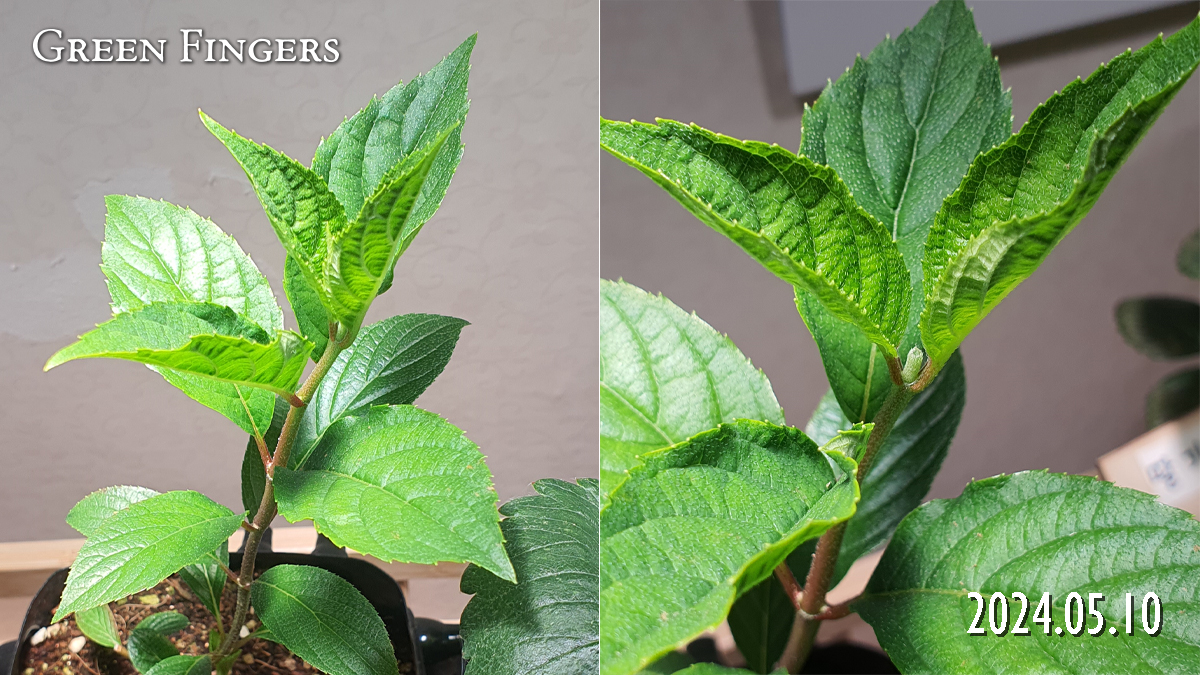
In early May, I bought young hydrangea saplings of two varieties: Diamant Rouge and Limelight. As someone who loves LED-based indoor gardening, I decided to grow them without natural sunlight, using full-spectrum LED grow lights.
- Their foliage responded well, staying lush and green.
- I even pinched off some top growth to encourage branching.


🌱 Unexpected Growth Patterns
While I expected the top nodes to push out new growth, something surprising happened—two strong branches began to grow from the base of the plant. I was thrilled at first… until tiny flying bugs started to appear.

🦟 Fungus Gnats Took Over
Soon after, fungus gnats emerged in swarms. Since I didn’t have pesticide on hand, I tried natural treatments first:
- Hydrogen peroxide spray (3% solution) — ineffective
- Hydrogen peroxide + vinegar mix — still no results
The bugs kept multiplying, likely from dormant larvae in the soil. Eventually, I realized the best decision was to move my hydrangeas to the balcony.

🍓 Even the Strawberry Pot Got Infected
To my surprise, the bugs had already spread to my indoor strawberry planter as well. I moved it outside with the hydrangeas to limit the infestation. Sadly, it seems the fertilizer in the soil may have contributed to the problem by attracting the gnats.
🧪 What I Learned from This Indoor Gardening Mistake
- Fertilizer is important, but it should be applied with caution in indoor setups.
- Fungus gnats thrive in moist, fertilized soil.
- Always keep pesticide or neem oil spray on hand if you’re doing indoor gardening.
- Once infestation starts, it's hard to stop without physically moving the plants.
💡 Final Thoughts
Indoor LED gardening is rewarding, but it requires proactive pest management. My hydrangeas are now thriving on the balcony, free of bugs (for now), and I’m ready for round two—with the proper tools this time.
Visit Us at Greenfingers
Thanks for reading! All the plants you see in my posts are lovingly raised right here at Greenfingers. We specialize in healthy, vibrant tropical plants and want to share the joy of gardening with the world.
If you’re a plant lover traveling through South Korea, feel free to stop by and say hello!
- Farm Name: Greenfingers (그린핑거스)
- Location: 42-6, Munbak-gil, Nangseong-myeon, Sangdang-gu, Cheongju-si, Chungcheongbuk-do, Republic of Korea (Postal Code: 28182)
- Follow us on Instagram: [@greenfingers.center]
"Growing happiness, one leaf at a time."
